

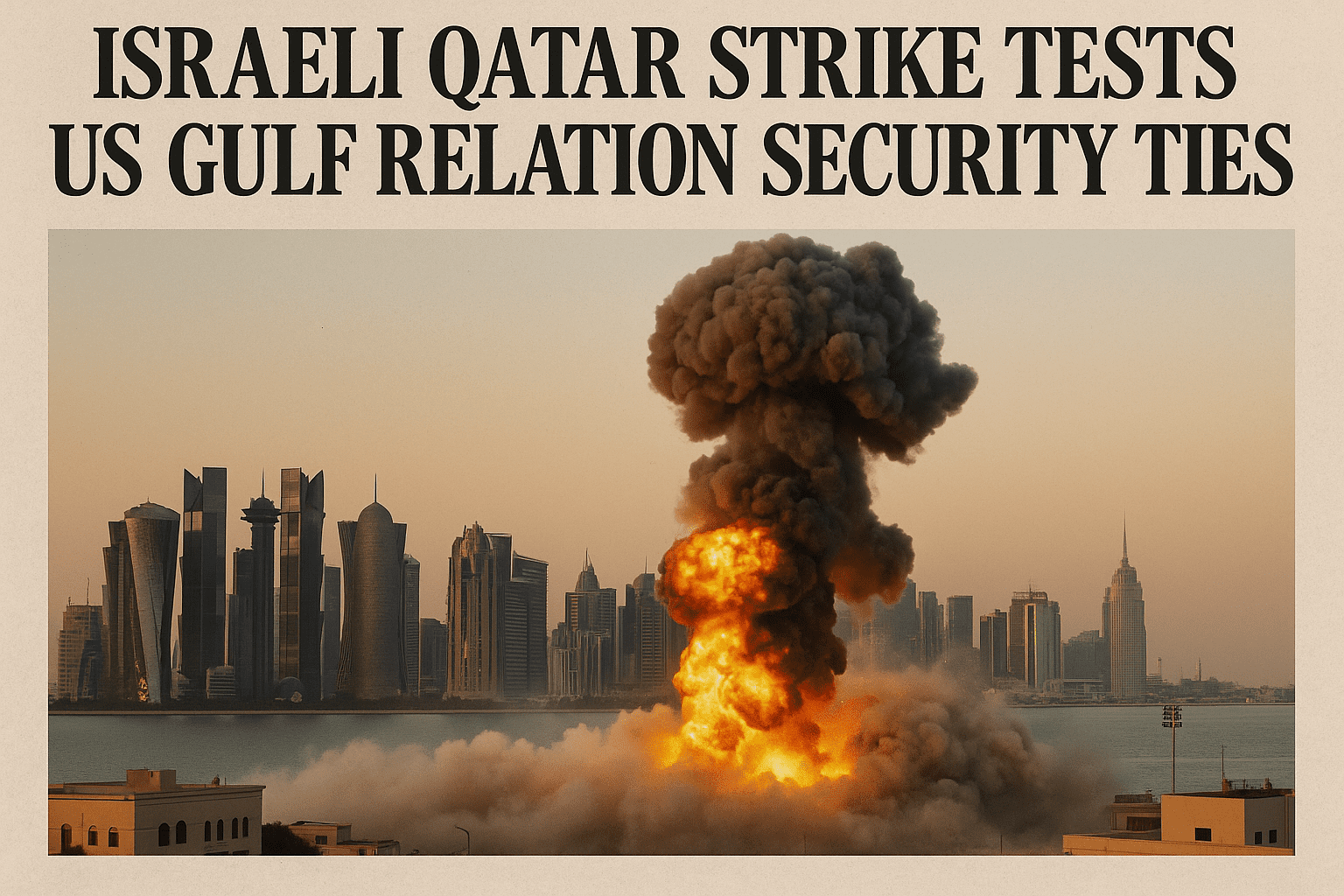
The Israeli military strike in Qatar on September 9, 2025, has created unprecedented tensions in US Gulf Relations, as Gulf Cooperation Council states question America’s commitment to their security following the attack that killed five Hamas negotiation team members in Doha. The incident marks a significant test of the strategic partnerships that have anchored American influence in the Middle East for decades.
Gulf States Question US Security Guarantees
The strike has fundamentally shaken Gulf states’ confidence in US security assurances, with analysts noting that the attack on Qatar—a major non-NATO US ally hosting the largest American military base in the region—demonstrates the limitations of US protection. Gulf officials have expressed concerns about the reliability of the United States as a defense partner, particularly given Washington’s unwillingness to restrain Israeli military actions against American allies.
“The assumption that if we were American allies we wouldn’t be attacked by American allies turned out to be false,” noted Rashid Al Mohannadi, a fellow at the Middle East Council on Global Affairs. This sentiment reflects broader Gulf doubts about US commitment, with the Israeli strikes amplifying concerns about American protection being “conditional and politically volatile.”
GCC Responds with Enhanced Defense Cooperation
In response to the unprecedented attack, the Gulf Cooperation Council has announced sweeping defense integration measures, declaring that “the security of the GCC states is indivisible.” The Joint Defense Council outlined five key initiatives including enhanced intelligence sharing, accelerated early warning systems, updated defense plans, and joint military exercises scheduled over the next three months.
The coordinated response represents the most significant Gulf defense cooperation announcement in years, with member states—Saudi Arabia, UAE, Kuwait, Bahrain, Qatar, and Oman—signaling their intent to reduce dependence on US security guarantees. Regional analysts suggest this could mark the beginning of a more autonomous Gulf defense posture, though political divisions may hinder the formation of a formal “Arab NATO” structure.
The implications extend beyond immediate security concerns, potentially affecting broader US strategic interests in the region. The incident has also complicated efforts to expand the Abraham Accords, with Saudi Arabia now unlikely to normalize relations with Israel without significant Palestinian state concessions. Even existing normalization agreements between Israel and UAE or Bahrain could face reconsideration as Gulf states reassess their regional security assumptions.