

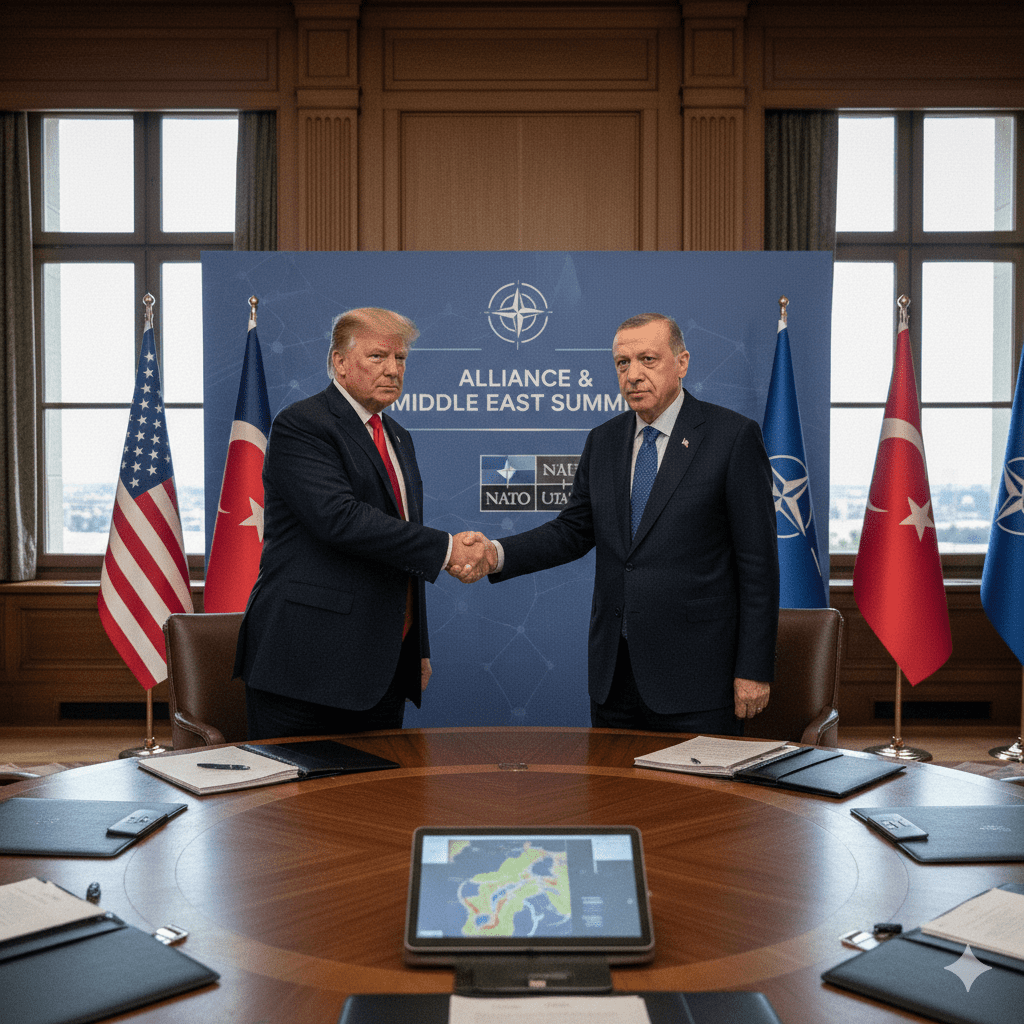
The Trump Erdogan summit taking place at the White House today marks a pivotal moment in US-Turkey relations, as President Donald Trump welcomes Turkish President Recep Tayyip Erdogan for their first bilateral meeting in six years. This high-stakes diplomatic encounter addresses critical geopolitical issues including Turkey’s exclusion from the F-35 fighter program, Syria’s reconstruction, and the ongoing Gaza crisis.
F-35 Fighter Jets and Defense Cooperation Take Center Stage
The most contentious issue on the agenda remains Turkey’s potential return to the F-35 program, from which Ankara was expelled in 2019 following its purchase of Russian S-400 air defense systems. Trump has signaled optimism about resolving this dispute, stating he expects F-35 talks to “conclude positively.” Turkish officials emphasize that Turkey has already paid $1.4 billion for aircraft it never received, with Erdogan calling the exclusion “not suitable for a strategic partnership.”
The defense cooperation discussions extend beyond the F-35 program to include F-16 upgrades and broader military sales. Trump announced plans for “a major F-16 Deal” alongside the continuation of F-35 negotiations, suggesting a comprehensive approach to rebuilding defense ties. However, significant obstacles remain, including Congressional opposition due to Turkey’s human rights record and concerns from Greece and Israel about strengthening Turkey’s air capabilities.
Syria Policy Alignment and Regional Implications
The leaders find themselves more aligned than ever on Syria policy, particularly regarding the post-Assad regime led by interim President Ahmad al-Sharaa. Both Washington and Ankara support Syrian reconstruction efforts and the integration of US-backed Syrian Democratic Forces into the Syrian military, though with different visions for Kurdish autonomy. This alignment represents a significant shift from previous tensions over Syria policy.
Turkey’s expanding military footprint in Syria remains a delicate balancing act, as Ankara seeks to counter what it views as terrorist threats from Kurdish groups while Washington maintains relationships with these same forces. The Trump administration’s appointment of Tom Barrack as Turkey envoy has facilitated better coordination on Syria policy, reflecting a pragmatic approach to regional challenges.
Gaza Crisis Creates Diplomatic Tensions
The Gaza conflict presents perhaps the most challenging aspect of US-Turkey relations, with Erdogan positioning Turkey as Israel’s fiercest critic and Palestine’s strongest advocate. Turkey’s president has sharply criticized Israel’s military operations and urged global recognition of Palestinian statehood, directly opposing Trump’s renewed support for Israeli security interests.
This fundamental disagreement on Gaza policy could complicate broader regional stability efforts, particularly as both nations seek to influence Syria’s future and regional reconstruction projects. The White House may find itself mediating between Turkish and Israeli positions to prevent confrontations in Syria and maintain regional cooperation.
Economic Partnership and Trade Expansion
Beyond security issues, the summit addresses significant economic opportunities, with both nations targeting $100 billion in bilateral trade. Turkey has already demonstrated goodwill by lifting additional tariffs on US goods and agreeing to a major liquefied natural gas deal worth approximately 70 billion cubic meters over 20 years through the Mercuria pipeline.
The economic dimension includes Turkey’s commitment to purchasing Boeing aircraft, representing a substantial commercial victory for American manufacturers. These deals provide both leaders with tangible achievements to showcase, particularly as Trump emphasizes trade victories and Erdogan seeks to modernize Turkey’s economy through increased Western investment.
The Trump Erdogan summit represents more than a bilateral meeting; it signals a broader recalibration of US strategy toward middle powers in an increasingly multipolar world. Trump’s recognition of Turkey’s potential as a “hefty middle power” reflects pragmatic adjustments to changing global dynamics, while Erdogan’s return to the White House after four years validates his patient diplomatic approach.