

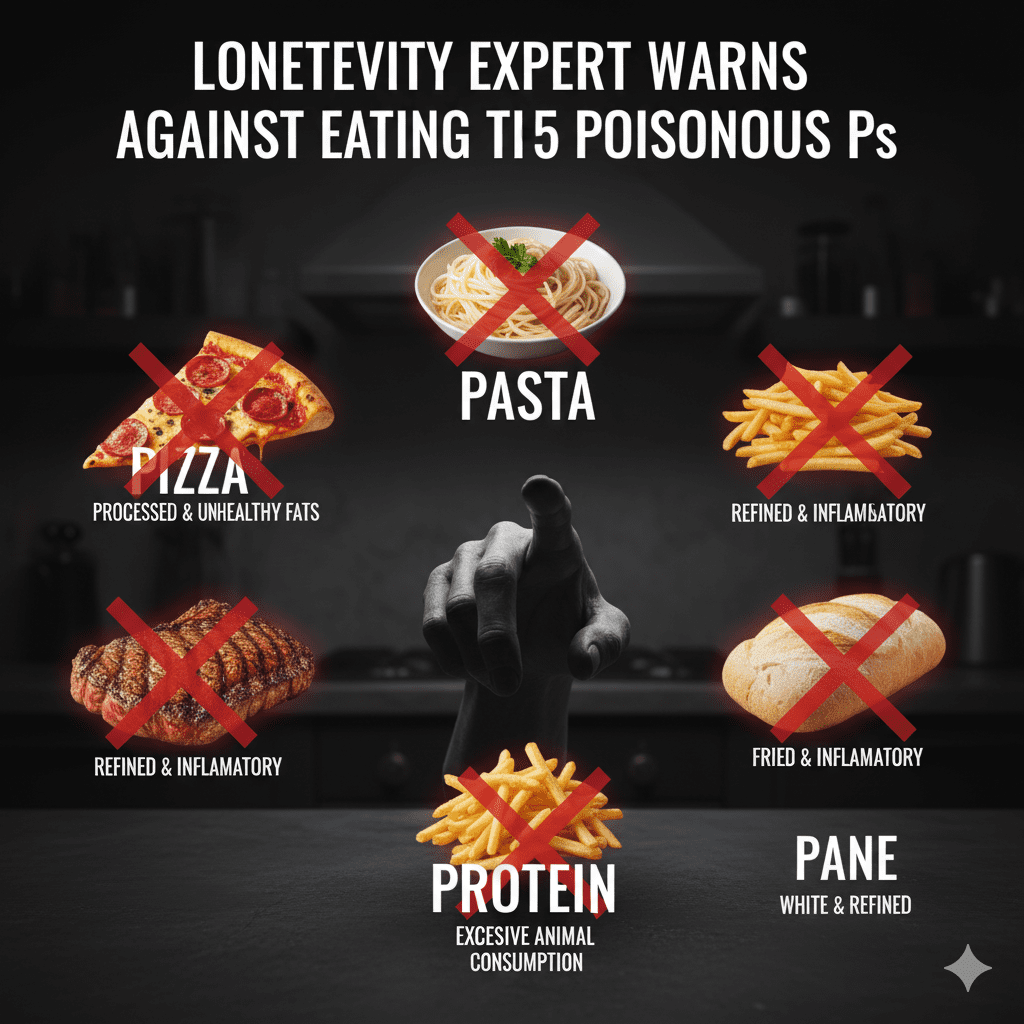
Longevity experts emphasize the importance of diet in extending lifespan, and Dr. Valter Longo, a leading researcher on aging, has identified the 5 poisonous Ps—pizza, pasta, protein, potatoes, and pane (Italian bread)—as foods to avoid if you want to live to 100.
What Are the 5 Poisonous Ps?
Dr. Longo, director of the University of Southern California’s Longevity Institute, highlights how these five common foods contribute to inflammation and chronic diseases that shorten life. While these foods are staples in many diets, especially Italian cuisine, their overconsumption is linked to obesity and health decline. He points out that modern Italian diets have strayed from the original Mediterranean diet, which was plant-based with moderate fish and limited meat.
The 5 poisonous Ps are:
- Pizza: Often high in processed ingredients and unhealthy fats.
- Pasta: Typically white, refined pasta is a highly processed starch that quickly converts to sugar, promoting inflammation.
- Protein: Refers mainly to excessive animal protein consumption, which can accelerate aging processes.
- Potatoes: Especially in fried or processed forms, contribute to inflammation.
- Pane: The Italian word for bread, usually white and refined, similarly fueling inflammation.
Healthy Alternatives for Longevity
Dr. Longo advocates for a diet similar to the original Mediterranean diet, which he terms “Lite Italian.” This diet focuses on plant-based foods, healthy fats like olive oil, and moderate consumption of fish—limited to two or three meals per week. Beans, chickpeas, green peas, and other legumes are recommended as primary protein sources instead of animal proteins.
Other experts warn against sugar-sweetened beverages such as soda and fruit juices, which drive inflammation linked to chronic diseases. White refined carbohydrates like white rice and white bread are also discouraged for their rapid conversion to sugar and inflammatory effects.
By following these dietary guidelines and avoiding the 5 poisonous Ps, individuals may improve their chances of living a longer, healthier life.