

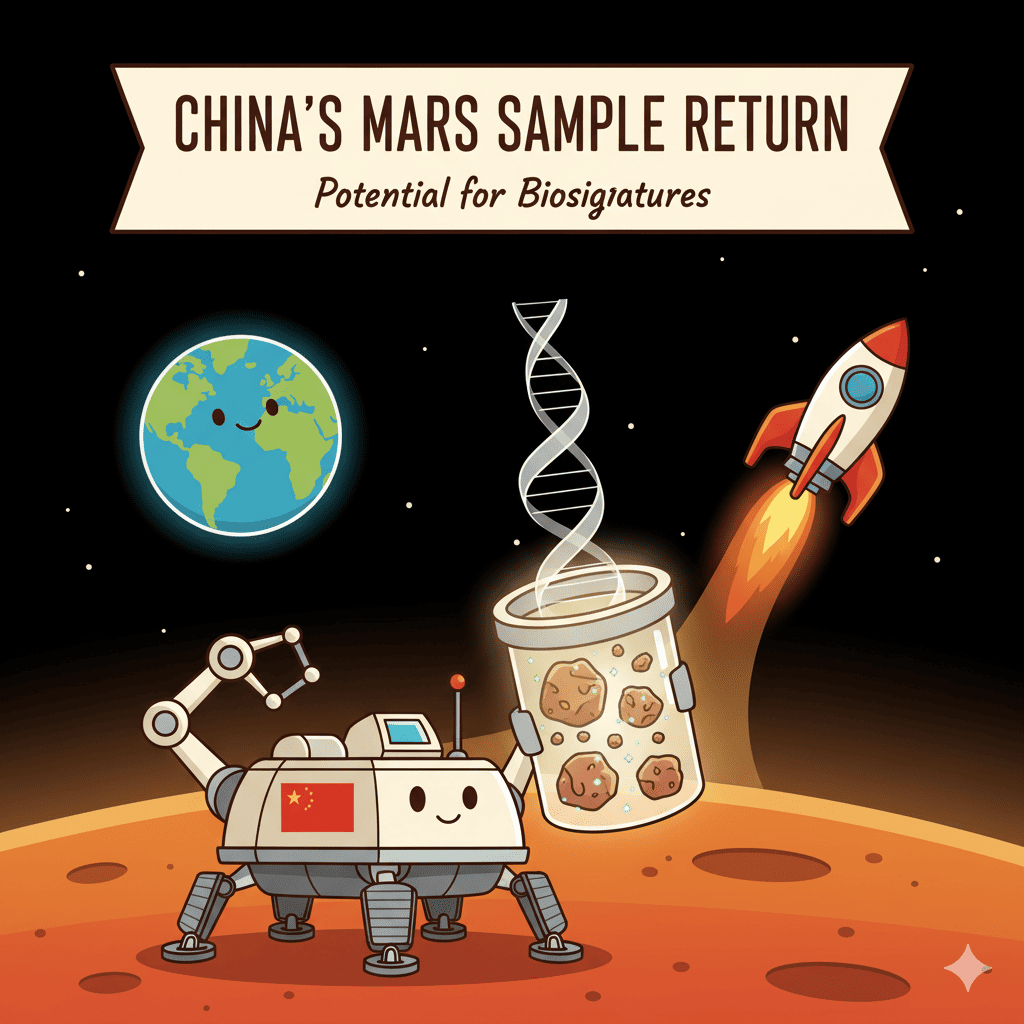
China’s ambitious Mars Sample Return mission, known as Tianwen-3, is set to launch in 2028 with the goal of returning no less than 500 grams of Martian samples to Earth by around 2031. This mission is a critical step in China’s planetary exploration, focusing on discovering signs of life, studying Mars’ habitability, and investigating its geological structure[1][2]. With NASA’s Mars Sample Return facing budget challenges, China’s mission could gain international attention for its potential to uncover biosignatures on Mars[3].
Scientific Objectives and Challenges
The Tianwen-3 mission involves two launches, with a lander and ascent vehicle on one rocket and an orbiter and return module on another. The process includes collecting samples on Mars, taking off from the Martian surface, rendezvousing in Mars’ orbit, and ensuring that Earth is not contaminated with unsterilized Martian material[1]. These challenges are significant, but China is open to international collaboration, which could enhance the mission’s success[3].
International Cooperation and Implications
While China progresses with its Mars Sample Return mission, there are discussions about potential international cooperation. The European Space Agency (ESA) has been involved in talks about providing an Earth Return Orbiter for such missions[3]. However, NASA’s budget constraints have slowed their Mars Sample Return project, potentially opening opportunities for China to lead in this area[4].